New Equipment | Solder Materials
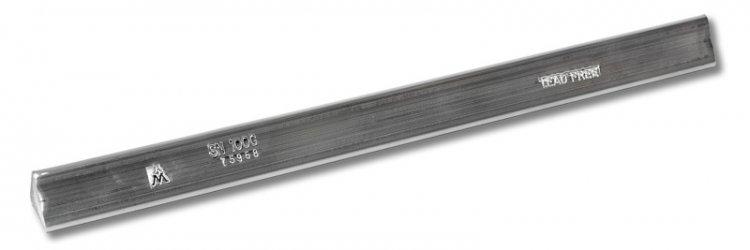
SN100C is a lead-free solder alloy developed by Nihon Superior in Japan that is comprised of tin-copper-nickel + germanium. SN100C offers user-friendly properties and has been proven in commercial production since 1999. The result of these advantages
Industry News | 2015-04-30 19:57:55.0
SMTA China announces that it presented awards for seven papers at the SMTA China East 2015 Conference Award Presentation Ceremony, held on Tuesday, April 21, 2015 at Shanghai World Expo Exhibition & Convention Center in conjunction with the SMTA China Annual Award Ceremony.
Industry News | 2011-08-18 21:23:09.0
For an industry that is constantly advancing, the technical conference at IPC Midwest Conference & Exhibition on September 21–22, in Schaumburg, Ill., will feature five sessions offering the latest research, methodologies and insights from industry experts to address critical challenges of manufacturing defect-free, quality electronics.
Technical Library | 2013-01-24 19:16:35.0
The electronics industry has mainly adopted the higher melting point Sn3Ag0.5Cu solder alloys for lead-free reflow soldering applications. For applications where temperature sensitive components and boards are used this has created a need to develop low melting point lead-free alloy solder pastes. Tin-bismuth and tin-bismuth-silver containing alloys were used to address the temperature issue with development done on Sn58Bi, Sn57.6Bi0.4Ag, Sn57Bi1Ag lead-free solder alloy pastes. Investigations included paste printing studies, reflow and wetting analysis on different substrates and board surface finishes and head-in-pillow paste performance in addition to paste-in-hole reflow tests. Voiding was also investigated on tin-bismuth and tin-bismuth-silver versus Sn3Ag0.5Cu soldered QFN/MLF/BTC components. Mechanical bond strength testing was also done comparing Sn58Bi, Sn37Pb and Sn3Ag0.5Cu soldered components. The results of the work are reported.
Technical Library | 2019-01-09 19:19:52.0
The electronics industry has widely adopted Sn-3.0Ag-0.5Cu solder alloys for lead-free reflow soldering applications and tin-copper based alloys for wave soldering applications. In automated soldering or rework operations, users may work with Sn-Ag-Cu or Sn-Cu based alloys. One of the challenges with these types of lead-free alloys for automated / hand soldering operations, is that the life of the soldering iron tips will shorten drastically using lead-free solders with an increased cost of soldering iron tool maintenance/ tip replacement. Development was done on a new lead-free low silver solder rework alloy (Sn-0.3Ag-0.7Cu-0.04Co) in comparison with a number of alternative lead-free alloys including Sn-0.3Ag-0.7Cu, Sn-0.7Cu and Sn-3.0Ag-0.5Cu and tin-lead Sn40Pb solder in soldering evaluations.
GPD Global | https://www.gpd-global.com/co_website/pdf/doc/FPC-with-Time-Pressure-Control-in-FLOware-Software-22240106.pdf
FPC with Time Pressure Control - Integrated can process any application for which that reservoir is compatible (e.g., patterns, dots, lines), in a wide range of material viscosities: cream solder, silver paste, epoxies, bond, oil, etc. Theory of
| http://etasmt.com/cc?ID=te_news_news,26367&url=_print
I.C.T ROUTER SILVER-Trade Info-Reflow oven,SMT Reflow Soldering Oven-cmsadmin Reflow oven,SMT Reflow Soldering Oven 当前位置: Home >> News >> Trade Info I.C.T ROUTER SILVER I.C.T ROUTER SILVER This machine is required at the final stage of SMT line to cut a Panel into Modules