Industry Directory | Consultant / Service Provider / Manufacturer
Eureka Dry Tech's IPC/JEDEC J-Std-033c Ultra Low Humidity Dry Cabinets provides moisture/humidity controlled storage of MSD,PCB, IC packages. Drying technology trusted by millions in replacing baking, nitrogen & desiccant packs.
Industry Directory | Other / Consultant / Service Provider / Manufacturer
Taiwan Dry Tech Corp. manufacturer of Eureka Dry Tech Fast Super Dryers for moisture/humidity proof protective storage of PCB, MSD, IC packages, meets IPC/JEDEC J-STD-033 & IPC-1601.

Specification : Model CWVC-1S PCB depaneling Cutting Length (mm) unlimited PCB depaneling Cutting Speed (mm/s) 0~400 PCB depaneling Cutting Thickness
New Equipment | ESD Control Supplies
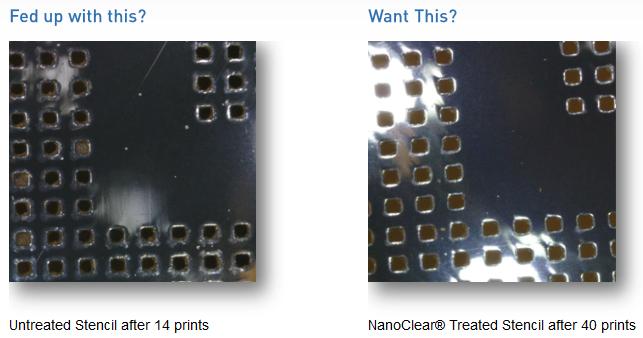
High performance fluxophobic stencil treatments wipes Enhance your stencil performance in seconds! Aculon is pleased to announce the launch of their latest generation of stencil coating technology. Aculon’s proprietary technology treats the undersi
Industry News | 2010-09-13 15:36:15.0
IPC — Association Connecting Electronics Industries® has released IPC-1601, Printed Board Handling and Storage Guidelines. The industry's sole standard on the handling, packaging and storage of printed boards, IPC-1601 provides users with guidance on how to protect printed boards from contamination, physical damage, solderability degradation, electrostatic discharge and moisture uptake.
Industry News | 2018-10-18 09:37:27.0
How To Set Profile In SMT Reflow Oven
Technical Library | 2024-09-02 17:01:54.0
A printed circuit board (PCB) is an integral component of any electronic product and is among the most challenging components to recycle. While PCB manufacturing processes undergo generations of innovation and advancement with 21st century technologies, the recycling of PCBs primarily employs 1920's shredding and separation technologies. There is a critical need for alternative PCB recycling routes to satisfy the increasing environmental demands. Previous work has developed an environmentally benign supercritical fluid process that successfully delaminated the PCB substrates and separated the PCB layers. While this work was successful in delamination of the PCB substrates, further understanding is needed to maximize the interactions between the supercritical fluid and PCB for an optimal processing scenario. As such, this research presents an exploratory study to further investigate the supercritical fluid PCB recycling process by using supercritical carbon dioxide and an additional amount of water to delaminate PCB substrates. The focus of this study is to test delamination success at low temperature and pressure supercritical conditions in comparison to the previous studies. Furthermore, material characterization methods, such as differential scanning calorimetry, dynamic mechanical analysis, and Fourier transform infrared spectroscopy, are included to study the delaminating mechanisms. Results from the recycling process testing showed that the PCB substrates delaminated easily and could be further separated into copper foils, glass fibers and polymers. Surprisingly, the material characterization suggested that there were no significant changes in glass transition temperature, crosslink density, and FTIR spectra of the PCBs before and after the supercritical fluid process.
Technical Library | 2024-02-05 17:51:01.0
Objective: Drying = reducing the humidity in PCB before soldering Preventing delamination caused by thermal stress after moisture absorption Methods: Drying in convection and/ or vacuum oven Parameters subject to material type, soldering surface, layer count, time to soldering, layout (copper-plated areas)
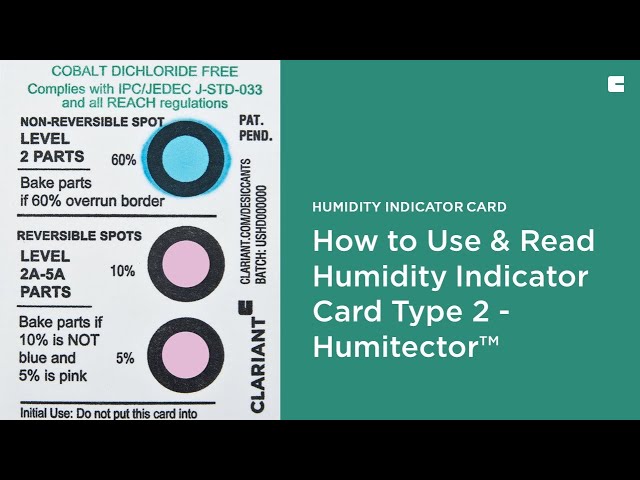
A Sustainable Alternative - Humitector cards are halogen-free and cobalt dichloride free. Visit https://www.clariant.com/solutions/products/2017/10/31/00/12/humitector-type-2-nonreversible-humidity-indicator-card?utm_source=CLRYouTube&utm_medium=Vi
ASYMTEK Products | Nordson Electronics Solutions | https://www.nordson.com/en/divisions/sonoscan/support/application-notes/2082-voids-and-delaminations
. The capacitor at top has three voids, which typically occur between electrode plates. A short may occur immediately or after a period of use