Industry Directory | Manufacturer
Auspi Enterprises Co., Ltd., one of the professional suppliers of printed circuits in China. We found your company info on the web knowing that you're dealing with electronics, which we think you may have demand on pcbs.
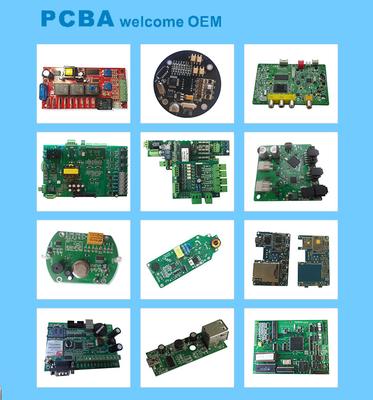
New Equipment | Assembly Services
No. Items technological Capability 1 Layer 1-20 layer 2 Copper thickness 0.5-4.0oz 3 Board thickness 0.2mm-6.0m
Industry News | 2012-05-04 09:21:15.0
As printed boards evolve and chip speeds increase, the use of microwave technology in commercial applications, such as cell phone towers and in military products, is expanding.
Industry News | 2010-09-13 15:36:15.0
IPC — Association Connecting Electronics Industries® has released IPC-1601, Printed Board Handling and Storage Guidelines. The industry's sole standard on the handling, packaging and storage of printed boards, IPC-1601 provides users with guidance on how to protect printed boards from contamination, physical damage, solderability degradation, electrostatic discharge and moisture uptake.
Technical Library | 2017-09-07 13:56:11.0
As a surface finish for PCBs, Electroless Nickel/Electroless Palladium/Immersion Gold (ENEPIG) was selected over Electroless Nickel/Immersion Gold (ENIG) for CMOS image sensor applications with both surface mount technology (SMT) and gold ball bonding processes in mind based on the research available on-line. Challenges in the wire bonding process on ENEPIG with regards to bondability and other plating related issues are summarized.
Technical Library | 2013-01-17 15:37:21.0
A problem exists with electroless nickel / immersion gold (ENIG) surface finish on some pads, on some boards, that causes the solder joint to separate from the nickel surface, causing an open. The solder has wet and dissolved the gold. A weak tin to nickel intermetallic bond initially occurs, but the intermetallic bond cracks and separates when put under stress. Since the electroless nickel / immersion gold finish performs satisfactory in most applications, there had to be some area within the current chemistry process window that was satisfactory. The problem has been described as a 'BGA Black Pad Problem' or by HP as an 'Interfacial Fracture of BGA Packages…'[1]. A 24 variable experiment using three different chemistries was conducted during the ITRI (Interconnect Technology Research Institute) ENIG Project, Round 1, to investigate what process parameters of the chemical matrix were potentially satisfactory to use and which process parameters of the chemical matrix need to be avoided. The ITRI ENIG Project has completed Round 1 of testing and is now in the process of Round 2 TV (Test Vehicle) build.
SMTnet Express, January 12, 2023, Subscribers: 24,747, Companies: 11,692, Users: 27,678 █ Electronics Manufacturing Technical Articles BLACKPAD REVISITED Since the implementation of lead-free soldering, solderability issues appear
SMTnet Express, October 10, 2024, Subscribers: 25,836, Companies: 12,282, Users: 29,256 █ Electronics Manufacturing Technical Articles Brief description of ENIG for Multilayer PCB ENIG (Electroless Nickel/Immersion Gold) is to deposit
Heller Industries Inc. | https://hellerindustries.com/intermetallics-growth/
. During reflow, with the addition of tin-lead solders, the intermetallic grows. With other board metal finishes, other metallics form, such as AuSn when soldering components to boards with gold-flash finish (and tin-lead solder
| https://www.eptac.com/ask/failing-to-remove-gold-plating-in-final-assembly/
board’s acceptance in final assembly? Answer: The gold plating on boards is typically an ENIG coating, which is Electroless Nickell, Immersion Gold plating