New Equipment | Solder Materials
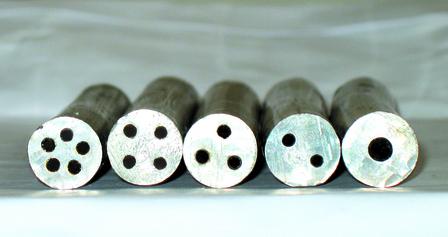
The MULTICORE portfolio of cored solder wire features the award-winning multiple flux core technology that ensures the even and consistent distribution of flux throughout the solder wire. This mainstay in Henkel’s line of solder products delivers eas
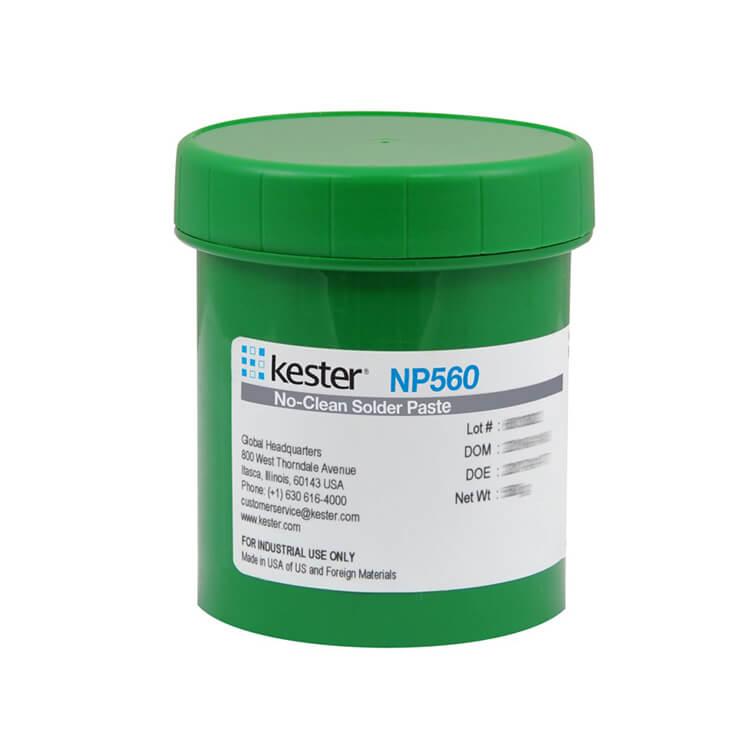
Sn96.5Ag3.0Cu0.5 no-clean Solder Paste NP560 lead-free soldering paste SMT Solder Paste Sn96.5Ag3.0Cu0.5 no-clean Solder Paste NP560 flux solder paste Product description: Sn96.5Ag3.0Cu0.5 no-clean Solder Paste NP560 is a no-clean, lead-free,
Electronics Forum | Mon Feb 16 15:01:21 UTC 2026 | SMTA-64414785
I realize that this is an old request, but there are lots of issues with this, so I’ll try to answer the question and hope it is a learning experience for others. First – there is no indication of the location so if someone was willing to help they
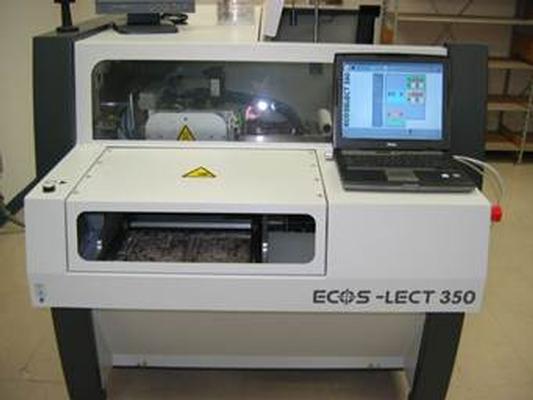
Used SMT Equipment | Soldering - Selective
• Less then 100 hours • Stand-alone Machine • 2 Spray Nozzles/Programable • Dual Solder pots / Dual Heads – Loaded with SAC305 • Heads can run 4 different assembles • Pot level detection / Upgraded self-feeder • Automatic solder refill / Autom
Industry News | 2022-01-10 16:55:15.0
The SMTA Capital Chapter Officer team is excited to provide our members with a free technical webinar on "Use of Photonic Soldering to Rework Chip Components" presented by Dr. Vahid Akhavan, Global Application Engineer at NovaCentrix. The presentation will take place on January 20th at 12:00am EST.
Industry News | 2018-10-18 08:36:26.0
How the modern solder reflow oven works?
Technical Library | 2023-01-17 17:27:13.0
Reflow profile has significant impact on solder joint performance because it influences wetting and microstructure of the solder joint. The degree of wetting, the microstructure (in particular the intermetallic layer), and the inherent strength of the solder all factor into the reliability of the solder joint. This paper presents experimental results on the effect of reflow profile on both 63%Sn 37%Pb (SnPb) and 96.5%Sn 3.0%Ag 0.5%Cu (SAC 305) solder joint shear force. Specifically, the effect of the reflow peak temperature and time above solder liquidus temperature are studied. Nine reflow profiles for SAC 305 and nine reflow profiles for SnPb have been developed with three levels of peak temperature (230 o C, 240 o C, and 250 o C for SAC 305; and 195 o C, 205 o C, and 215 o C for SnPb) and three levels of time above solder liquidus temperature (30 sec., 60 sec., and 90 sec.). The shear force data of four different sizes of chip resistors (1206, 0805, 0603, and 0402) are compared across the different profiles. The shear force of the resistors is measured at time 0 (right after assembly). The fracture surfaces have been studied using a scanning electron microscopy (SEM) with energy dispersive spectroscopy (EDS)
Technical Library | 2021-09-08 14:23:27.0
Although the electronics industry has largely settled on the use of SAC alloys for the assembly of the majority of lead free products, debate continues to exist over which SAC alloy – SAC305 (Sn3.0Ag0.5Cu) or SAC405 (Sn3.8Ag0.8Cu) – to use. The North American industry generally favours SAC405, while the Asian industry favours SAC305. SAC305 has the significant benefit of being less expensive than SAC405 owing to its lower silver content. However, there are lingering questions about whether the reliability of SAC305 is comparable to that of SAC405. Recent studies have concluded that no significant difference exists, but many potential applications were not studied. This paper compares the results of reliability testing of SAC305 and SAC405 in three different cases on a test vehicle representative of a mid-complexity server-type product which included a range of component types from CBGAs to discrete resistors.
America, especially Sn3.0Ag0.5Cu (SAC305), the
SMTnet Express, September 9, 2021, Subscribers: 26,718, Companies: 11,435, Users: 26,839 Investigation of the Mechanical Properties of Mn-Alloyed Tin-Silver-Copper Solder Solidified with Different Cooling Rates Manganese can
Heller Industries Inc. | https://hellerindustries.com/wp-content/uploads/2018/07/pan_APEX06.pdf
). One of the major differences between SnPb and SnAgCu lead-free solders is that SnAgCu solders require higher reflow temperature than eutectic SnPb