Industry Directory | Manufacturer
1 to 30-layer FR-4 PCBs with HDI, Aluminum based PCBs, Copper based PCBs & Iron based PCBs; - Prototype and mass production of High-Mix, Medium or Low-Volume orders. - Quality Guaranteed.
Nextreme designs and manufactures manufactures micro-scale electronics cooling and energy harvesting solutions for telecommunications, semiconductor, consumer, medical, aerospace and government markets.
New Equipment | Rework & Repair Equipment
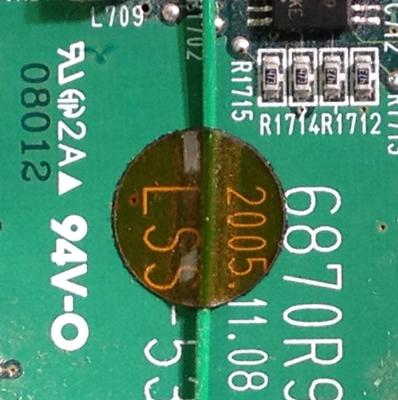
BEST HotDots™ are designed to simply and cleanly attach jumper wires on a board. HotDots™ are built to survive at high temperature as both the adhesive and the polyimide material are designed to withstand wash and reflow temperatures. HotDots™ are a
New Equipment | Education/Training
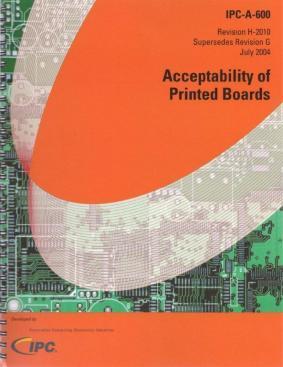
IPC A-600H Acceptability of Electronic Assemblies. The IPC-A-600, "Acceptability of Printed Boards " is the most widely used published specification on printed wiring boards. This specification has set the standard for rigid printed boards in terms o
Industry News | 2003-06-10 08:16:44.0
The following text describes the application of NWA Quality Analyst to quality control in the assembly of electronic components.
Industry News | 2014-10-10 16:27:51.0
CB provider Cirtech Electronics will be liquidating their assets utilizing the online auction services of GoIndustry and Baja Bid.
Technical Library | 2022-03-16 19:48:18.0
Dendrites, Electrochemical Migration (ECM) and parasitic leakage, are usually caused by process related contamination. For example, excess flux, poor handling, extraneous solder, fibers, to name a few. One does not normally relate these fails with environmental causes. However, creep corrosion is a mechanism by which electronic products fail in application, primarily related to sulfur pollution present in the air.1 The sulfur reacts with exposed silver, and to a lesser extent, exposed copper. This paper will explore various aspects of the creep corrosion chemical reaction
Technical Library | 2017-06-13 17:14:59.0
For tin-rich solder alloys, 200 C (392 F) is an extreme temperature. Intermetallic growth in tin-copper systems is known to occur and is believed to bear a direct relationship to failure mechanisms. This study of morphological changes with time at elevated temperatures was made to determine growth rates of tin-copper intermetallics. Preferred growth directions, rates of thickening, and notable changes in morphology were observed.Each of four tin-base alloys was flowed on copper and exposed to temperatures between 100 C and 200 C for time periods of up to 32 days. Metallographic sections were taken and the intermetallics were examined. Intermetallic layer thickening is characterized by several distinct stages. The initial growth of side plates is extremely rapid and exaggerated. This is followed by retrogression (spheroidization) of the elongated peaks and by general thick-
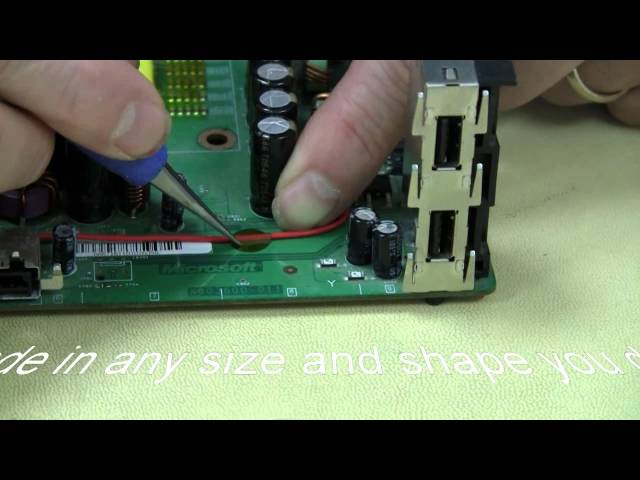
This video demonstrated the use of BEST Inc HotDots(TM) which allow wires to be affixed to the PCB or other surfaces-even when those surfaces go through reflow. There are other similar products out there but none of which can be readily customized no

This video describes the IPC A-600 training and certification program. The IPC A-600 specification is a set of acceptability specifications for printed circuit boards. These standards determine the acceptance and reject criteria for printed wiring bo
Training Courses | | | IPC-600 Specialist (CIS)
The Certified IPC-600 Specialist (CIS) training targets quality assurance and acceptance of bare printed circuit boards.
Training Courses | | | IPC-600 Trainer (CIT)
The Certified IPC-600 Trainer (CIT) courses recognize individuals as qualified trainers in the area of quality assurance of bare printed circuit boards and prepare them to deliver Certified IPC-600 (CIS) training.
Imagineering, Inc. | https://www.pcbnet.com/blog/what-is-the-pcb-fabrication-process/
. Laser direct imaging exposes certain parts of the board to light in the shape of the PCB pattern. Any unexposed parts of the board will develop off, leaving the remaining film as an etch barrier The remaining film serves as an etch barrier that will be removed from the exposed copper to form the copper circuitry
| http://etasmt.com/cc?ID=te_news_industry,26961&url=_print
. Phenolic resin is resistant to weak acids and weak bases. It will decompose when exposed to strong acids and will corrode when exposed to strong bases

 800X800.jpg)
 800X800.jpg)