STATS ChipPAC is a leading provider of advanced semiconductor packaging and test services to global customers in the communication, consumer and computing markets.
Industry Directory | Manufacturer's Representative
Specialty materials for SMT Assembly. Solder Paste, Spheres, Tac Fluxes, Flip Chip Fluxes, Solder wi
Customer demand for highly sophisticated and ever smaller devices has made semiconductor packaging a vital contributor to system performance. As integrated circuits have become faster and more complex, the cost and performance of the interconnect bet
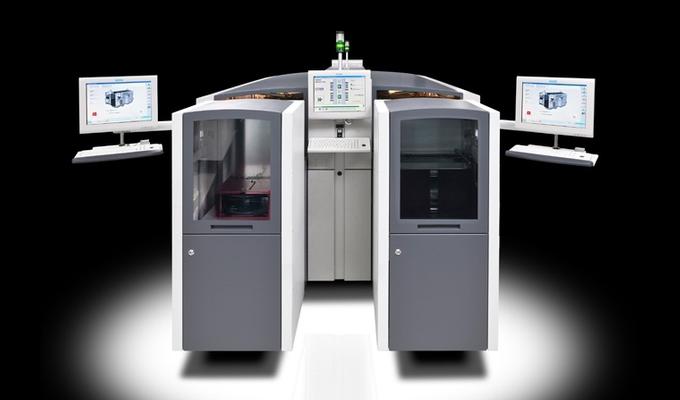
Chip assembly? Classic SMT placement? Our SIPLACE CA can do both. The SIPLACE CA is the world's first placement platform that combines bare-die placement directly from the wafer and classic SMT placement in a single machine and a single production
Industry News | 2016-08-23 16:25:55.0
The SMTA and Chip Scale Review magazine are pleased to announce the Workshops for the 13th Annual International Wafer-Level Packaging Conference (IWLPC). On Thursday, October 20, there will be professional workshops given by instructors who are pre-eminent authorities in their fields. IWLPC will be held October 18-20, 2016 at the DoubleTree Airport Hotel in San Jose, California.
Industry News | 2003-05-21 08:13:48.0
Two half-day workshops on Thursday during SMTA
Technical Library | 2015-09-23 22:08:32.0
A molded interconnect device (MID) is an injection molded thermoplastic substrate which incorporates a conductive circuit pattern and integrates both mechanical and electrical functions. (...) Flip chip bonding of bare die on MID can be employed to fully utilize MID’s advantage in device miniaturization. Compared to the traditional soldering process, thermo-compression bonding with gold stud bumps provides a clear advantage in its fine pitch capability. However, challenges also exist. Few studies have been made on thermocompression bonding on MID substrate, accordingly little information is available on process optimization, material compatibility and bonding reliability. Unlike solder reflow, there is no solder involved and no “self-alignment,” therefore the thermo-compression bonding process is significantly more dependent on the capability of the machine for chip assembly alignment.
Technical Library | 2009-07-22 18:33:41.0
This paper deals with the thermal effects of joule heating in a high interconnect density, thin core, buildup, organic flip chip substrate. The 440 μm thick substrate consists of a 135 μm thick core with via density of about 200 μm. The typical feature sizes in the substrate are 50 micron diameter vias is the core/buildup layers and 12 micron thick metal planes. An experimental test vehicle is powered with current and the temperature rise was measured. A numerical model was used to simulate the temperature rise in the TV.

Flux spray coating on a PCB with uniformal thickness down to 5 microns, with clear edge definition and minimal overspray. Can coat large or shoot dots with the same jet.
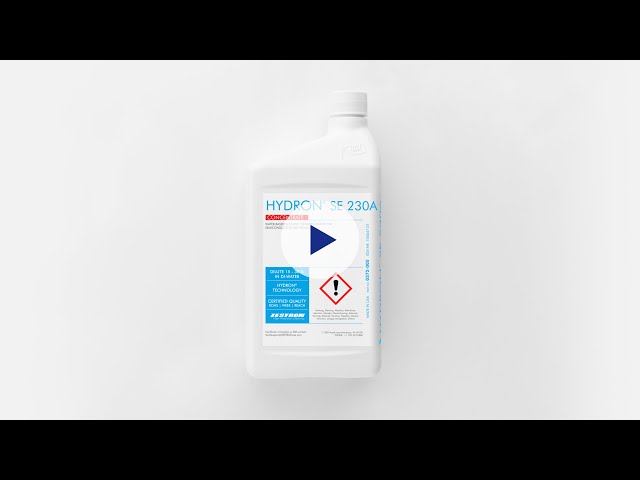
Water-based, alkaline defluxing for semiconductor electronics HYDRON® SE 230A is a water-based, single-phase cleaning agent specifically developed for the use in dip tank processes. It removes flux residues from a wide range of semiconductor electro
Events Calendar | Sun Mar 01 18:30:00 UTC 2020 - Wed Mar 04 18:30:00 UTC 2020 | Fountain Hills, Arizona USA
16th International Conference and Exhibition on DEVICE PACKAGING
International Microelectronics Assembly and Packaging Society (IMAPS)
GPD Global | https://www.gpd-global.com/dispense-flip-chip-bga.php
Dispense on Flip Chip & BGA, Bumped Silicone Die: Underfill Dispensing Home Products Fluid Dispensing Equipment High Precision Dispenser - MAX Series Large Format Board Dispensing - DS Series Table Top Dispensing Equipment Loader
Heller Industries Inc. | https://hellerindustries.com/wp-content/uploads/2018/07/Vacuum-Void-Reduction-Reflow.pdf
solder voiding phenomena. REFERENCES [1] Ning-Cheng Lee, Reflow Soldering Processes and Troubleshooting SMT, BGA, CSP and Flip Chip Technologies, “SMT problems During Reflow, Section 6.1, Voiding,” Butterworth-Heinemann, Reed Elsevier Group, 2002. [2] R. J