Industry Directory | Manufacturer
PWB designs and manufactures test equipment and provides services to test the reliability of Printed Circuit Boards.
Professional trainer/coordinator for electronic assemblies, surface mount and plated through-hole printed wiring boards
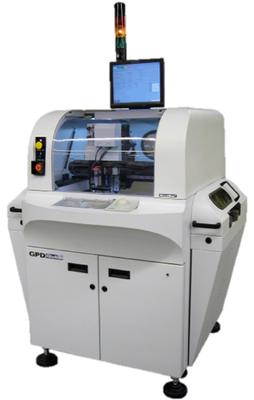
Precision Dispensing System for Heated Dispense Applications The GPD Global MAX II is a compact; high-accuracy system designed for today’s advanced heated dispensing applications. The frame is molded from “liquid rock” which gives the system a stabl
New Equipment | Rework & Repair Equipment
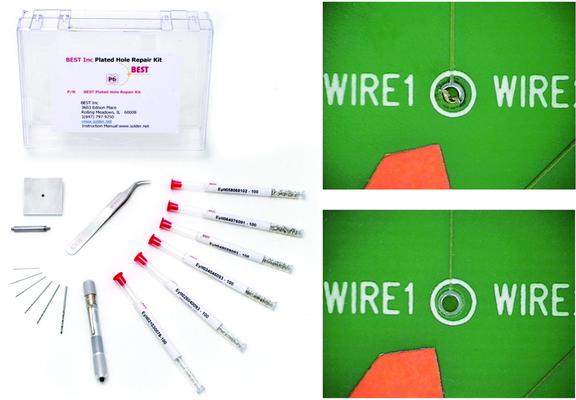
Through-holes or vias can be damaged in the handling of PCB's or through the improper removal of a device. The BEST Through-hole Repair Kit can assist in the repair of these through-holes to make them look as good as new. BEST Through-hole repair ki

Used SMT Equipment | Soldering - Wave
Senju Lead Free Wave SPF-300 Very Nice clean machine Dual Wave Solder No Nitrogen No Top Preheat Zones 355mm Max PCB width 3x Bottom Radiant Preheat Zones SPF-300

Used SMT Equipment | X-Ray Inspection
• Nordson DAGE VR950 new technology, open, transmissive X-ray tube: -All voltages can reach <0.95 micron feature resolution – The highest voltage is 160KV, target power: 3W -Long service life of filament components -Automatic st
Industry News | 2013-07-22 09:54:27.0
GPD Global has introduced its new NCM5000 dispense pump for easy jetting. With only two wetted parts and no seals or springs to replace or adjust, field operation is simple.
Industry News | 2003-02-18 08:52:21.0
Placed Another Order for an ELX6146 High-speed Emma Test System from Viking Test Services
Technical Library | 2019-07-17 17:56:34.0
The increased demand for electronic devices in recent years has led to an extensive research in the field to meet the requirements of the industry. Electrolytic copper has been an important technology in the fabrication of PCBs and semiconductors. Aqueous sulfuric acid baths are explored for filling or building up with copper structures like blind micro vias (BMV), trenches, through holes (TH), and pillar bumps. As circuit miniaturization continues, developing a process that simultaneously fills vias and plates TH with various sizes and aspect ratios, while minimizing the surface copper thickness is critical. Filling BMV and plating TH at the same time, presents great difficulties for the PCB manufactures. The conventional copper plating processes that provide good via fill and leveling of the deposit tend to worsen the throwing power (TP) of the electroplating bath. TP is defined as the ratio of the deposit copper thickness in the center of the through hole to its thickness at the surface. In this paper an optimization of recently developed innovative, one step acid copper plating technology for filling vias with a minimal surface thickness and plating through holes is presented.
Technical Library | 2021-07-20 20:02:29.0
During the manufacturing of printed circuit boards (PCBs) for a Flight Project, it was found that a European manufacturer was building its boards to a European standard that had no requirement for copper wrap on the vias. The amount of copper wrap that was measured on coupons from the panel containing the boards of interest was less than the amount specified in IPC-6012 Rev B, Class 3. To help determine the reliability and usability of the boards, three sets of tests and a simulation were run. The test results, along with results of simulation and destructive physical analysis, are presented in this paper. The first experiment involved subjecting coupons from the panels supplied by the European manufacturer to thermal cycling. After 17 000 cycles, the test was stopped with no failures. A second set of accelerated tests involved comparing the thermal fatigue life of test samples made from FR4 and polyimide with varying amounts of copper wrap. Again, the testing did not reveal any failures. The third test involved using interconnect stress test coupons with through-hole vias and blind vias that were subjected to elevated temperatures to accelerate fatigue failures. While there were failures, as expected, the failures were at barrel cracks. In addition to the experiments, this paper also discusses the results of finite-element analysis using simulation software that was used to model plated-through holes under thermal stress using a steady-state analysis, also showing the main failure mode was barrel cracking. The tests show that although copper wrap was sought as a better alternative to butt joints between barrel plating and copper foil layers, manufacturability remains challenging and attempts to meet the requirements often result in features that reduce the reliability of the boards. Experimental and simulation work discussed in this paper indicate that the standard requirements for copper wrap are not contributing to the overall board reliability, although it should be added that a design with a butt joint is going to be a higher risk than a reduced copper wrap design. The study further shows that procurement requirements for wrap plating thickness from Class 3 to Class 2 would pose little risk to reliability (minimum 5 μm/0.197 mil for all via types).Experimental results corroborated by modeling indicate that the stress maxima are internal to the barrels rather than at the wrap location. In fact, the existence of Cu wrap was determined to have no appreciable effect on reliability.
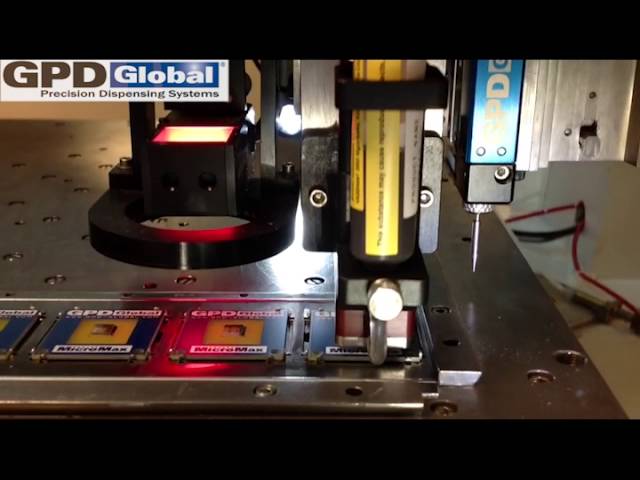
Precision Dispensing System for Heated Dispense Applications The GPD Global MAX II is a compact; high-accuracy system designed for today’s advanced heated dispensing applications. The frame is molded from “liquid rock” which gives the system a stabl

Teaching video on PCB through hole repair. BEST instructors teach the method for repair of a damaged eyelet using a multitude of different close up and angled views. Repair is completed per the IPC 7721 instructions. http://www.solder.net
Training Courses | | | IPC-6012 Specialist (CIS)
The Certified IPC-6012 Specialist (CIS) training covers design, fabrication and inspection of rigid printed boards.
Training Courses | | | IPC-6012 Trainer (CIT)
The Certified IPC-6012 Trainer (CIT) courses recognize individuals as qualified trainers in the area of design, fabrication and inspection of rigid printed boards and prepare them to deliver Certified IPC-6012 Specialist (CIS) training.
Career Center | , | Engineering
The New Product Introduction Engineer coordinates manufacturing costs for quote, design for manufacturing, pre-production builds and production launch through the involvement of cross-functional teams. Manages project budget Responsibilities � Inp
Career Center | Tustin, California USA | Engineering
REI seeks a motivated and experienced Manufacturing Equipment Engineer to join our California Operations Group! The Manufacturing Equipment Engineer will use his or her expertise primarily in automated optical inspection (AOI) and in evaluating, sele
Career Center | Rochester, Ohio USA | Engineering,Management,Production,Technical Support
Seasoned PCB assembler / supervisor. Utilizing surface mount machines, lead inserters, wave solders, reflow ovens, wire bonders and substrate fabrication technology. Very proficient in surface mount device and plated through hole component rework. Al
Career Center | Greenville, South Carolina USA | Engineering,Management,Production,Technical Support
OPERATIONS/ENGINEERING MANAGEMENT: Fourteen years progressive experience accumulated in the electronics assembly industry, 9 years in a managerial role. Proven process development, equipment selection and optimization, and employee development skills
SMTnet Express, March 12, 2020, Subscribers: 34,796, Companies: 10,981, Users: 25,688 Filling of Microvias and Through Holes by Electrolytic Copper Plating – Current Status and Future Outlook Credits: Atotech The electronics industry is further
| https://www.eptac.com/webinars/plated-through-hole-fill-understanding-the-process-and-assembly-requirements/
Plated Through Hole Fill: Understanding the Process and Assembly Requirements - EPTAC - Train. Work Smarter. Succeed Looking for solder training standards, manuals, kits, and more
| http://www.feedersupplier.com/SMT_THROUGH_HOLE
. Initially, all electronic components were through-hole mounted. Through-hole components have metal leads, and these leads are fed through-plated holes in the circuit board