New Equipment | Solder Materials
8 hours in controlled environment) Prints consistently at a wide range of speeds Wide reflow process window for profiling Excellent wetting on a variety of surface finishes Maintains tack over time Suitable for SnPb eutectic alloys as well
New Equipment | Rework & Repair Services
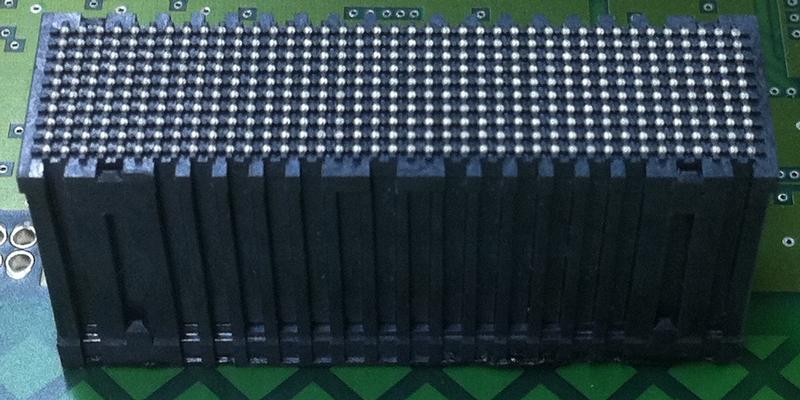
Many Fortune 500 clients, and numerous other OEMs and contract manufacturers of micro-electronics rely on Process Sciences to service, modify, reclaim, upgrade, and/or repair their circuit assemblies and array devices. PSI knows solder! Please rememb
Electronics Forum | Wed Aug 27 09:30:22 EDT 2008 | vladig
Hi Eyal, Sure you can do that. You might be able to use your "typical" reflow profile for eutectic, or tweak it slightly. it's a good idea to do a trial run and then get a couple of components cross-sectioned and checked for the microstructure of th
Electronics Forum | Fri Oct 06 08:21:26 EDT 2006 | inds
Mario, what happens when there are components on the boards that are not rated to take temperature of 230-240 C Peak for a mixed assembly. I guess there are tons of sn/Pb components that have rated temp of 225-230 C.. So in guess you might want
Industry News | 2018-10-18 08:36:26.0
How the modern solder reflow oven works?
Industry News | 2018-12-08 03:29:29.0
SMT Dictionary – Surface Mount Technology Acronym and Abbreviation
Technical Library | 2014-06-19 18:13:23.0
For high-density electronic packaging,the application of flip-chip solder joints has been well received in the microelectronics industry. High-lead(Pb) solders such as Sn5Pb95 are presently granted immunity from the RoHS requirements for their use in high-end flip-chip devices, especially in military applications. In flip-chip technology for consumer electronic products, organic substrates have replaced ceramic substrates due to the demand for less weight and low cost. However, the liquidus temperatures of high-Pb solders are over 300°C which would damage organic substrates during reflow because of the low glass transition temperature. To overcome this difficulty, the composite solder approach was developed...
Technical Library | 2021-08-25 16:34:37.0
As the traditional eutectic SnPb solder alloy has been outlawed, the electronic industry has almost completely transitioned to the lead-free solder alloys. The conventional SAC305 solder alloy used in lead-free electronic assembly has a high melting and processing temperature with a typical peak reflow temperature of 245ºC which is almost 30ºC higher than traditional eutectic SnPb reflow profile. Some of the drawbacks of this high melting and processing temperatures are yield loss due to component warpage which has an impact on solder joint formation like bridging, open defects, head on pillow.
Career Center | Rochester, New York USA | Engineering
I have done my undergraduate studies in Mechanical Engineering. I am pursuing my Master's Program in Electronics Packaging. I am currently working as a Research Assistant for RIT-CEMA (Center for Electronics Manufacturing and Assembly). My research
SMTnet Express, June 19, 2014, Subscribers: 22851, Members: Companies: 13906, Users: 36363 Anisotropic grain growth and crack propagation in eutectic microstructure under cyclic temperature annealing in flip-chip SnPb composite solder joints Y
| http://etasmt.com/cc?ID=te_news_industry,3561&url=_print
. Pure tin also has a tendency to form tin whiskers which can cause lead-to-lead shorting. Tin-Zinc. Sn-9wt.%Zn has a melting temperature of 198 deg C, making it a close alternative to eutectic Sn-Pb solder






winsouce.jpg)